












How throughput, product mix, and facility requirements shape your decision and where mid-rate sortation fits.
 Warehouse operations today are contending with variability in consumer demand and tighter delivery expectations. Matching the right sorter to your operation is important to avoid:
-
Inconsistent flow
-
Missed diverts
-
Struggles with product mix
-
Excess maintenance
-
Underused capacity
Conversations about sortation technology often start with which one is the highest speed, but companies that get the most value from their sortation investments match the right sorter to the right level of performance. The expectation to keep everything moving while maintaining consistent flow and accuracy remains the same whether the application is:
-
Shipping
-
Facility routing
-
Order consolidation
-
Inventory distribution
-
Workstation balancing
-
Buffering
-
Staging
The following approach can be used for matching sortation systems to your required throughput, SKU characteristics, and facility layout to maximize the value of your automation investment.
table of contents
-
How do you define the right throughput range for your operation?
-
When should you invest in high-rate sortation versus mid-rate?
-
Operational Requirements to Align Before Selecting Sortation
- Maintenance: Planning for Uptime and Recovery
How do you define the right throughput range for your operation?
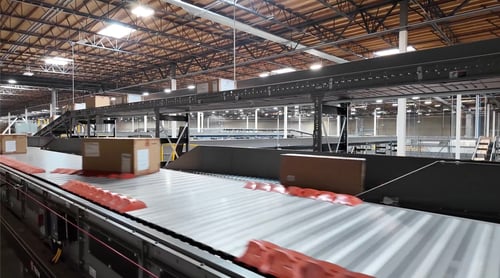 Throughput is the number that dominates every sortation conversation, but it needs to be interpreted in context. A sorter designed for a major parcel hub may deliver 300 or more cartons per minute, but that capacity creates no value in a regional distribution center that peaks at 120.
A practical throughput assessment should consider:
-
Average daily volume
-
Peak volume
-
Future growth expectations
-
Induction capacity
-
Bottlenecks
A sorter cannot deliver its full value if the surrounding system is not designed for the same flow. Infeed, destinations, chutes, and downstream processes all need to be evaluated together.
The 45 to 200 carton-per-minute range is where a large number of retail, ecommerce, and parcel operations live. This is mid-rate sortation territory, and these operations need accuracy, uptime, and operational simplicity more than speed. Overbuilding throughput capacity in this range introduces unnecessary complexity in maintenance budgets without delivering proportional ROI.
Why does SKU complexity change the sortation equation?
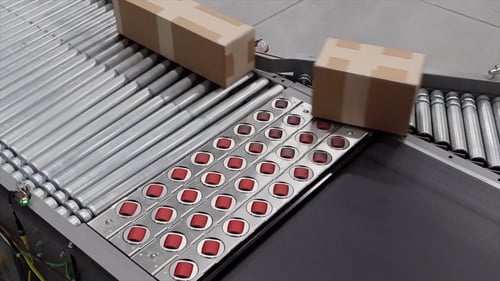 SKU complexity is not just a count of products in your catalog. It includes:
-
Item characteristics of what you are sorting
-
Cartons
-
Totes
-
Polybags
-
Mixed parcel sizes
-
Irregular dimensions
-
-
Range of weights your sorter must handle without compromising accuracy or product integrity
-
How your product mix changes over time as you add new categories or shift channel mix
Operations with high SKU complexity need sortation that handles a wide range of item profiles without requiring constant reconfiguration. That means you need a divert mechanism that can manage tightly spaced products with consistent accuracy, and controls that adapt to product variability without manual intervention.
What role does facility layout play in system selection?
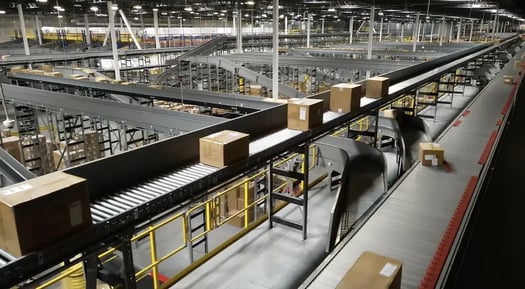 Facility layout is the constraint most often underweighted in the selection process, yet the available footprint drastically shapes your options.
Warehouse space remains a significant operating expense, making better use of an existing facility an important consideration when evaluating automation. In brownfield facilities, available space can be tight or irregularly shaped.
A high-capacity loop sorter requires:
-
Significant floor space
-
Ceiling clearance
-
Footprint that accommodates the full loop plus induction stations and discharge destinations.
Many regional distribution centers simply do not have that space.
A line-based sortation approach, by contrast, can fit into tighter layouts with single-sided or dual-sided divert configurations at 30, 45, or 90 degree angles.
Speed of implementation matters too. A facility that needs to be operational quickly needs a sortation platform designed for fast installation and commissioning. All-electric designs reduce infrastructure requirements by eliminating the pneumatic systems that add installation time, maintenance complexity, and points of failure.
When should you invest in high-speed sortation versus mid-rate?
The decision between high-rate and mid-rate sortation requires matching the system to the operational role of the facility within your network.
High-rate sortation, including sliding shoe and cross-belt technologies, is the right answer for central parcel hubs and large ecommerce fulfillment centers where the business case is defined by:
-
Peak throughput
-
Nonstop availability
-
Network-critical reliability
These environments justify the higher capital investment, more complex maintenance requirements, and longer implementation timelines because the volume and operational intensity require that level of performance.
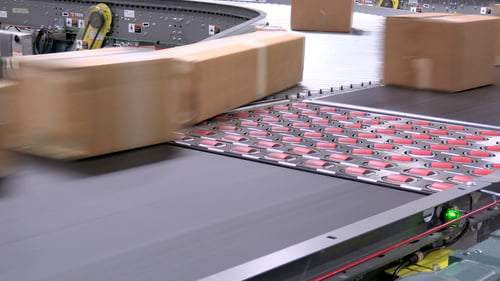 Mid-rate sortation fits a different operational profile: regional distribution centers, growing ecommerce operations, retail replenishment facilities, and mixed-item environments where throughput requirements fall in the 45 to 200 cartons per minute range. In these operations, the priority is:
-
Accuracy
-
Uptime
-
Ease of maintenance
-
Ability to expand capacity as the business grows
The risk of defaulting to high-rate when mid-rate is the better fit shows up in three places:
-
Capital cost: you are paying for capacity you will not use for years, if ever.
-
Maintenance complexity: high-rate systems require more specialized maintenance skills and carry higher ongoing service costs.
-
Operational simplicity: your team's ability to troubleshoot, maintain, and optimize the system directly affects uptime.
Operational Requirements to Align Before Selecting Sortation
Before comparing products, clarify the operational requirements that will drive your decision. Six factors should align before you move to technology selection:
-
Throughput requirement: define realistic average, peak, and future volume needs.
-
Item profile: clarify the range of cartons, totes, polybags, and parcels the system must handle.
-
Footprint and layout: assess whether the site is greenfield or brownfield, and how much space is available for the sorter, infeed, destinations, and maintenance access.
-
Destination density: determine how many outputs are needed now and how destination requirements may evolve.
-
Integration complexity: evaluate controls, software, existing conveyor systems, and data exchange requirements.
-
Lifecycle value: consider uptime, maintenance, energy consumption, spare parts, and the ability to expand or reconfigure.
Once you’ve defined your throughput, item mix, layout, and maintenance requirements, you can evaluate how specific sortation technologies meet them.
For routing and shipping applications with mid-rate throughput needs, TrewSort® Swivel Wheel is one option to consider. Its controlled friction and independently driven wheel rows guide products toward their destinations. Evaluating how those features support your product mix, required flow, and service needs helps determine whether it fits your operation.
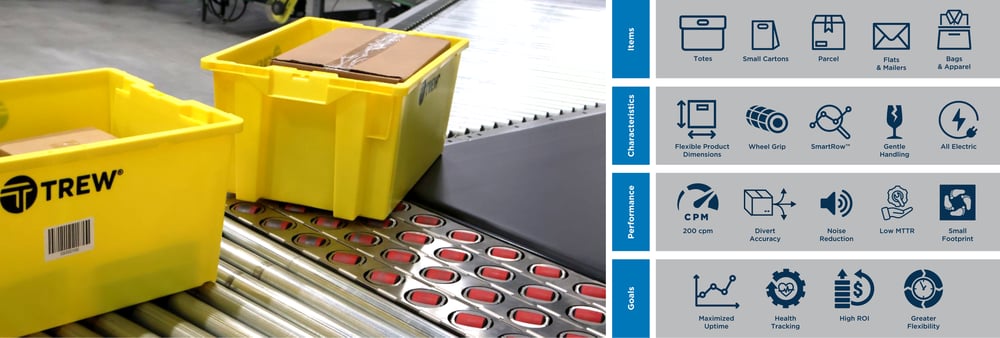
TrewSort® Swivel Wheel
Mid-rate sortation has long delivered dependable throughput, but flexibility, cost, and maintenance demands can limit its fit for some applications. As product mixes become less predictable, operations need that same dependability with greater handling flexibility, precise control, and easier service.
That's where TrewSort® Swivel Wheel Sortation enters the conversation. It is a friction-based linear sorter built for routing and shipping applications - designed to align with how dynamic operations run today.
Controlled friction and independently driven wheel rows deliver:
- Control over mixed products
- Consistency in flow
- Less reliance on upstream conditions
Rate & Materials
When product mix changes from day to day, consider the rate a sorter can sustain across the range of packages your operation handles. Do you process heavy, flat cartons or mixed SKU profiles? Spikes in SKU velocity due to seasonal promotions or changing consumer demand cause variation in product flow.
SmartRow™ & Wheel Grip Technologies
SmartRow™ and Wheel Grip technologies enable performance, control, and flexibility that mid-rate operations demand.
SmartRow™
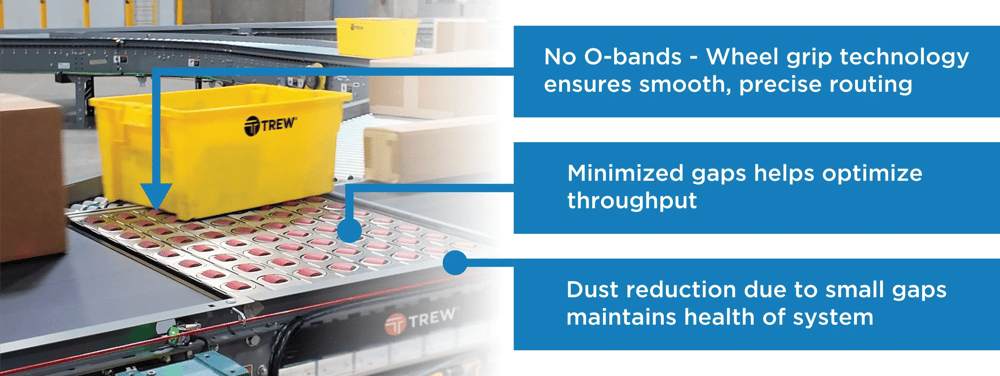
Each row of wheels controlled by motors and servo-driven positioning operates independently providing tighter product gaps and better divert accuracy. PLCs monitor row-level health and performance, communicating with the system to provide real-time adjustments. If something goes wrong, the system tells you exactly what failed and where.
Wheel Grip
TrewSort® Swivel Wheel delivers consistent product handling without excessive maintenance by balancing traction, for better package control, with durability, for long-term wear. The wheel grip technology:
- Maintains product orientation during divert
- Reduces slippage and tracking errors
- Provides reliable contact across mixed product types
Durability - Built for the Long Run
TrewSort® Swivel Wheel is designed and tested over tens of millions of cycles to withstand:
- Rapid position changes
- Continuous operation
- Real-world wear conditions
Operational benefits include:
- Longer component life
- Fewer unexpected failures
- More predictable performance over time
Maintenance: Planning for Uptime and Recovery
When comparing sortation systems, look beyond scheduled maintenance to what it takes to diagnose a problem and restore operation.
-
Can your team quickly locate the affected component?
-
How accessible is it?
-
What work is required to replace it?
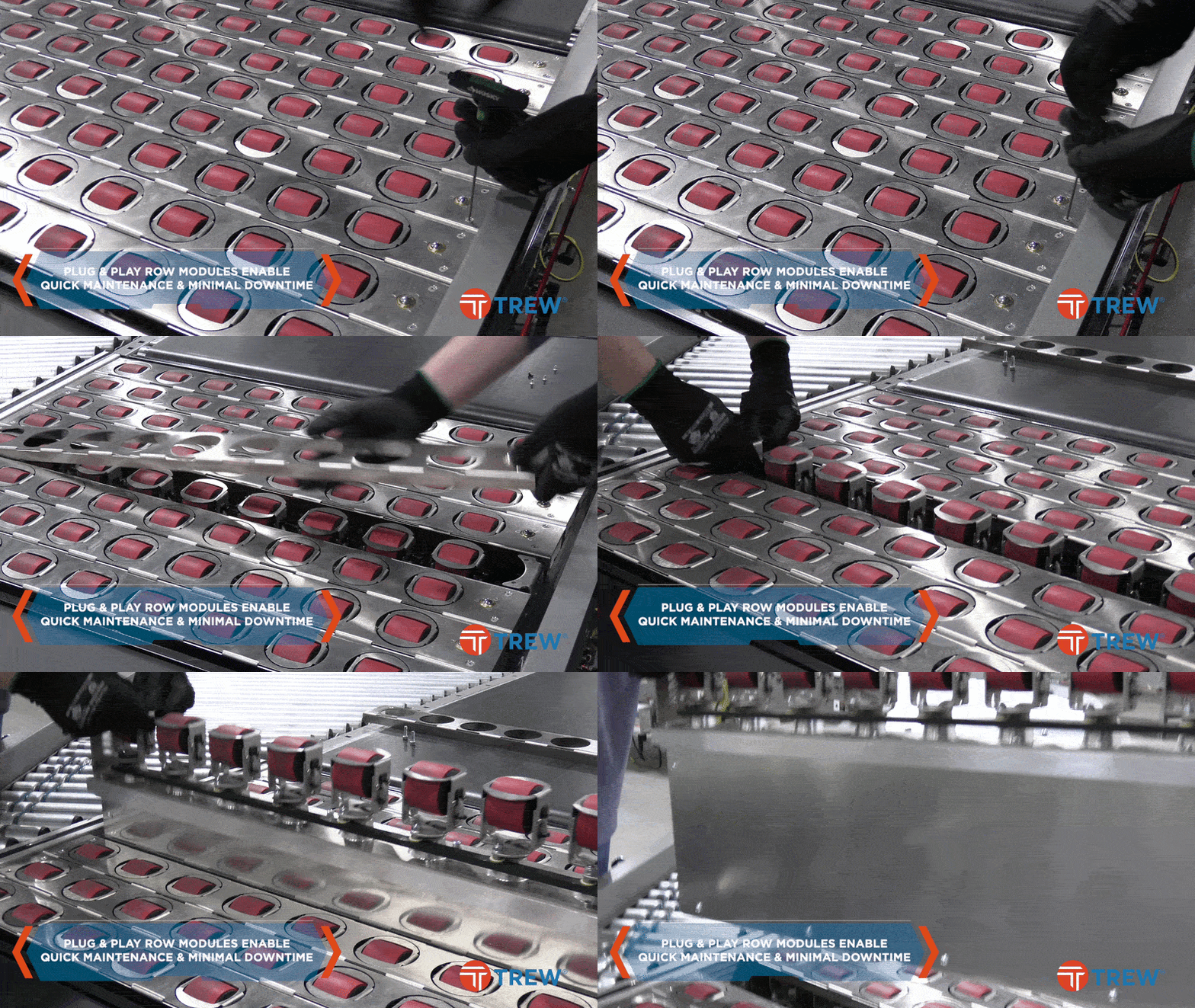
TrewSort® Swivel Wheel addresses these considerations with row-level diagnostics, a modular “slice” design, and plug-and-play components designed to simplify service. Evaluate those features against your maintenance team’s capabilities, spare-parts strategy, and available service windows to understand their value for your facility.
Maintenance-friendly features:
- Modular “slice” design
- Hot-swappable components
- Plug-and-play architecture
Simplified service:
- Replace components in minutes - not hours
- Identify issues at the row level
- Keep the system running while resolving problems
Operational impact:
-
- Less downtime
- Faster recovery
- More control over maintenance windows
TrewSort® Swivel Wheel is designed for real-world operations, delivering flow you can depend on - day in, day out. Ready to explore which sortation options best fit your operation?
Let's connect